
Understanding the Function of Pulse Oximeters in Contemporary Healthcare
One of the most widely used medical devices in both home and clinical settings is the pulse oximeter. They are essential for tracking a patient’s oxygen level and general respiratory health, despite their diminutive size and unassuming appearance.
The definition, operation, and significance of pulse oximeters in contemporary healthcare are examined in this article.
A Pulse Oximeter: What Is It?
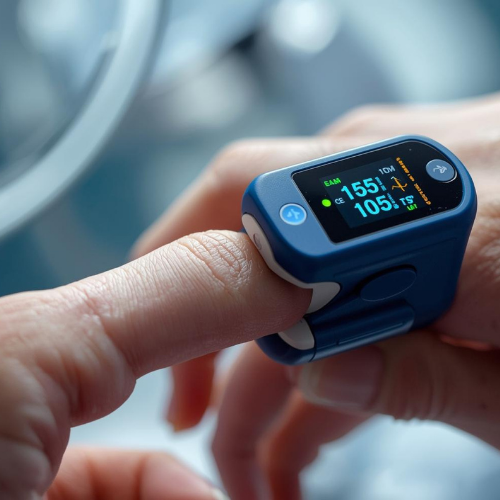
A non-invasive medical tool called a pulse oximeter is used to measure:
Blood oxygen saturation (SpO₂)
Heart rate, or pulse rate
Usually applied to a patient’s earlobe, toe, or fingertip, it produces quick results in a matter of seconds.
How Do Pulse Oximeters Work?
Hospitals, clinics, emergency rooms, and more and more homes are using pulse oximeters.
The principle of light absorption guides how pulse oximeters work.
Two light wavelengths are released by the apparatus:
The red light
Light in the infrared
As these lights travel through the tissue, oxygenated and deoxygenated hemoglobin absorb them in different ways. The device determines the blood’s oxygen saturation percentage by examining this difference.
There is no need for blood samples, and the procedure is quick and painless.
What Makes Oxygen Saturation Vital?
The efficiency with which oxygen is delivered to the body’s tissues is indicated by oxygen saturation. In healthy people, normal SpO₂ levels usually fall between 95% and 100%.
Low oxygen saturation could be a sign of:
respiratory conditions (such as pneumonia, COPD, and asthma)
Heart-related disorders
Acute respiratory illnesses
Requirement for additional oxygen
Particularly in critically ill patients, early detection of low SpO₂ can save lives.
Typical Clinical Applications for Pulse Oximeters
Pulse oximeters are employed in a number of medical settings, such as
Keeping an eye on patients during anesthesia and surgery
Evaluating respiratory disorders
Monitoring for emergencies and critical care
Assessing COVID-19 and other respiratory infection patients
Monitoring chronic heart or lung conditions at home
They are useful for both patients and healthcare providers due to their simplicity of use.
Pulse oximeter limitations:
interference caused by artificial nails or nail polish
decreased precision in inadequate peripheral perfusion
Although very helpful, pulse oximeters have certain drawbacks:
In cases of severe anemia, less accurate readings
Measurement-affecting motion artifacts. As a result, rather than being interpreted in a vacuum, pulse oximeter readings should always be interpreted in a clinical setting.
In medical education, pulse oximeters
It is crucial for medical students and healthcare trainees to comprehend pulse oximeters. They offer a useful illustration of the intersections between clinical decision-making, technology, and physiology. An essential clinical skill is understanding when and how to rely on pulse oximeter readings.
In conclusion
Pulse oximeters are straightforward but effective instruments that are now essential in modern medical practice. They facilitate early diagnosis, continuous monitoring, and improved patient outcomes by offering real-time data on oxygen saturation and pulse rate.
Pulse oximeters continue to be a vital tool in clinical practice and medical education as medical technology develops.
Disclaimer
This information is intended solely for educational purposes and should not be used in place of clinical judgment or expert medical advice.
[…] 4. Pulse Oximeter […]